 Español
 Português
 Русский
 العربية
 한국어
한국어
 日本語
日本語
 Français
 Deutsch
 ภาษาไทย

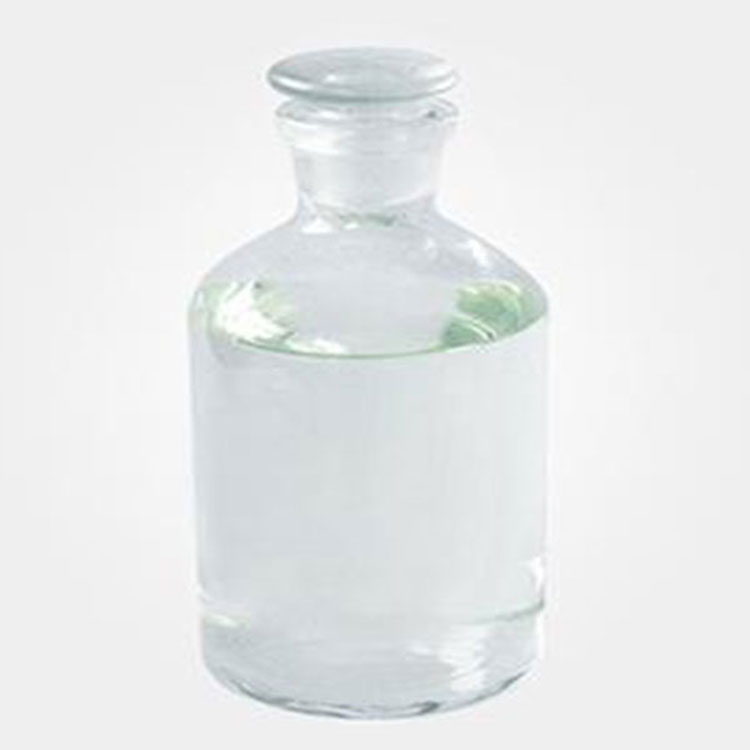
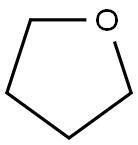
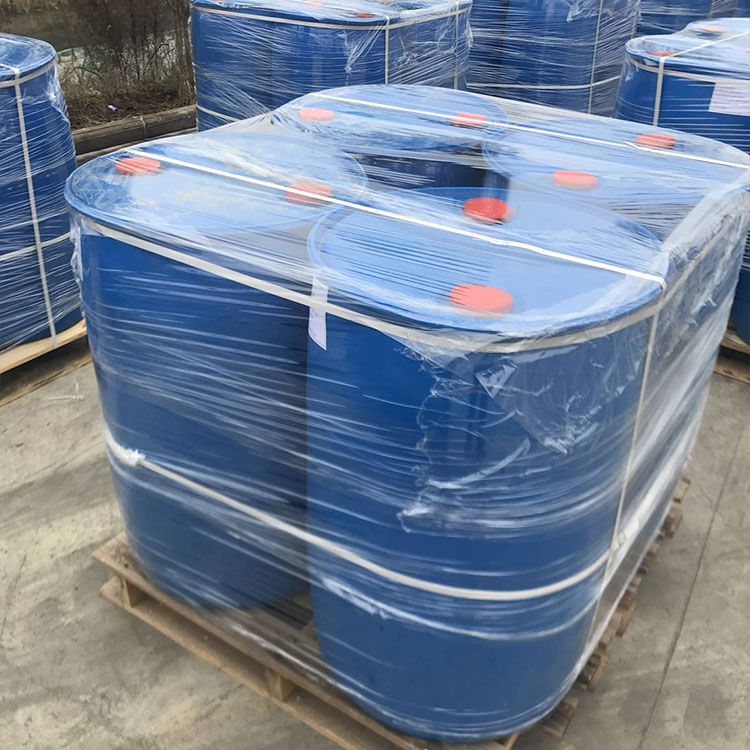
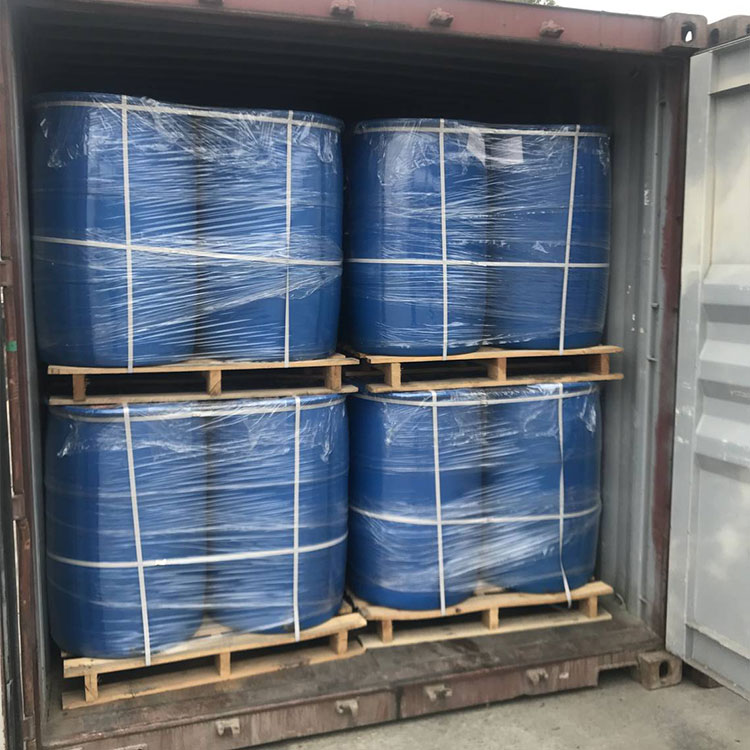
Tetrahydrofuran CAS#109-99-9
CAS: 109-99-9
MF: C4H8O
MW: 72.11
EINECS: 203-726-8
MOQ (Minimum Order Quantity): 1 FCL (Full Container Load)
Tetrahydrofuran CAS#109-99-9
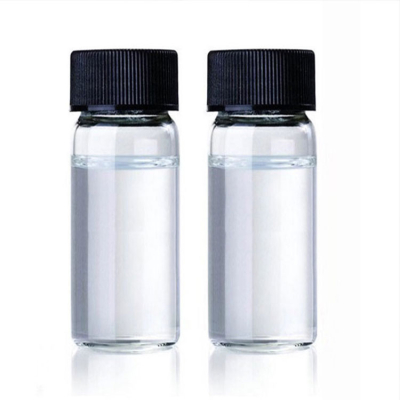
Tetrahydrofuran (THF) is a colorless, volatile liquid with an ethereal or acetonelike smell and is miscible in water and most organic solvents.It is highly flammable and may thermally decompose to carbon monoxide and carbon dioxide. Prolonged storage in contact with air and in the absence of an antioxidant may cause THF to decompose into explosive peroxides.
Tetrahydrofuran is used in the manufacture of polymers as well as agricultural, pharmaceutical, and commodity chemicals. Manufacturing activities commonly occur in closed systems or under engineering controls that limit worker exposure and release to the environment. THF is also used as a solvent (e.g., pipe fitting) that may result in more significant exposures when used in confined spaces without sufficient ventilation. Although THF is naturally present in coffee aroma, floured chickpeas, and cooked chicken, natural exposures are not anticipated to pose a significant hazard.
| Tetrahydrofuran Chemical Properties |
| Melting point | -108°C |
| Boiling point | 66 °C |
| density | 0.887 g/mL at 20 °C |
| vapor density | 2.5 (vs air) |
| vapor pressure | <0.01 mm Hg ( 25 °C) |
| refractive index | n |
| Fp | >230 °F |
| storage temp. | Store at +5°C to +30°C. |
| solubility | water: soluble |
| form | Liquid |
| color | <10(APHA) |
| Specific Gravity | 0.89 |
| Odor | Ethereal, detectable at 2 to 50 ppm |
| Relative polarity | 0.207 |
| PH | 7-8 (200g/l, H2O, 20℃) |
| PH Range | 7 |
| explosive limit | 1.5-12.4%(V) |
| Water Solubility | miscible |
| FreezingPoint | -108℃ |
| Thermal Conductivity | 0.145 W/(m·K) at 25 ℃ |
| Sensitive | Air Sensitive & Hygroscopic |
| λmax | λ: 245 nm Amax: ≤0.26 λ: 275 nm Amax: ≤0.046 λ: 315 μm Amax: ≤0.0044 |
| Merck | 14,9211 |
| BRN | 102391 |
| Henry's Law Constant | 1.54 (static headspace-GC, Welke et al., 1998) |
| Exposure limits | TLV-TWA 200 ppm (590 mg/m3) (ACGIH, MSHA, and OSHA); STEL 250 ppm (ACGIH); IDLH 20,000 ppm (NIOSH). |
| Dielectric constant | 11.6(-70℃) |
| Stability: | Stable. Incompatible with halogens, strong oxidizing agents, strong reducing agents, strong bases, oxygen. May generate explosive peroxides in storage if in contact with air. Highly flammable. Store at room temperature under nitrogen. Hazardous polymerisation may occur. Light sensitive. May contain 2,6-di-tertbutyl-4-methylphenol (BHT) as a stabilizer. |
| InChI | 1S/C4H8O/c1-2-4-5-3-1/h1-4H2 |
| InChIKey | WYURNTSHIVDZCO-UHFFFAOYSA-N |
| SMILES | C1CCOC1 |
| LogP | 0.45 at 25℃ |
| Surface tension | 27.31mN/m at 293.15K |
| CAS DataBase Reference | 109-99-9(CAS DataBase Reference) |
| IARC | 2B (Vol. 119) 2019 |
| NIST Chemistry Reference | Furan, tetrahydro-(109-99-9) |
| EPA Substance Registry System | Tetrahydrofuran (109-99-9) |
| Absorption | ≤0.0044 at 315nm ≤0.005 at 350nm ≤0.005 at 400nm ≤0.02 at 300nm ≤0.046 at 275nm ≤0.18 at 250nm ≤0.26 at 245nm ≤1.0 at 212nm |
| Safety Information |
| Hazard Codes | Xi,F,Xn |
| Risk Statements | 36/37/38-36/37-19-11-40 |
| Safety Statements | 26-36-33-29-16-46-37-13 |
| OEB | A |
| OEL | TWA: 200 ppm (590 mg/m3), STEL: 250 ppm (735 mg/m3) |
| RIDADR | UN 2056 |
| WGK Germany | 1 |
| RTECS | MD0916000 |
| F | 3-10-23 |
| Autoignition Temperature | 610 °F |
| TSCA | TSCA listed |
| HazardClass | 3 |
| PackingGroup | II |
| HS Code | 29321100 |
| Storage Class | 3 - Flammable liquids |
| Hazard Classifications | Acute Tox. 4 Oral Carc. 2 Eye Irrit. 2 Flam. Liq. 2 STOT SE 3 |
| Hazardous Substances Data | 109-99-9(Hazardous Substances Data) |
| Toxicity | LD50 oral (rat) 2880 mg/kg LC50 inhal (rat) 21,000 ppm (3 h) PEL (OSHA) 200 ppm (590 mg/m3) TLV-TWA (ACGIH) 200 ppm (590 mg/m3) STEL (ACGIH) 250 ppm (737 mg/m3) |
| IDLA | 2,000 ppm [10% LEL] |
Product Application of CAS#109-99-9
Tetrahydrofuran is used primarily (80%) to make polytetramethylene ether glycol, the base polymer used primarily in the manufacture of elastomeric fibers (e.g., spandex) as well as polyurethane and polyester elastomers (e.g., artificial leather, skateboard wheels). The remainder (20%) is used in solvent applications (e.g., pipe cements, adhesives, printing inks, and magnetic tape) and as a reaction solvent in chemical and pharmaceutical syntheses.