
 Español
 Português
 Русский
 العربية
 한국어
한국어
 日本語
日本語
 Français
 Deutsch
 ภาษาไทย

Citric Acid Industry Status and Capacity
2025/12/19 09:42
1. Overview of the Citric Acid Industry
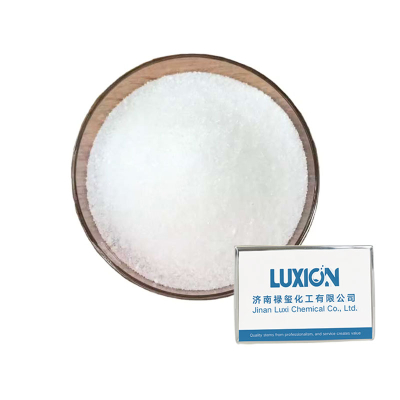
Citric acid, a crucial organic acid, is the most productive organic acid manufactured via biochemical methods globally and serves as a pillar product in the fermentation industry. It is mainly classified into monohydrate citric acid and anhydrous citric acid, with characteristics of being a white crystalline powder at normal temperature, having certain hygroscopicity, and being insoluble in oils. Its application scenarios cover multiple fields such as food industry, chemical industry, textile industry, livestock production, cosmetics, medicine, and fine chemicals. Particularly in the food and beverage industry, it is hailed as the "first edible acidulant" due to its excellent sour taste and safety performance.
2. Current Status of the Global Citric Acid Industry
2.1 Regional Distribution of Production Capacity
Global citric acid production capacity is mainly concentrated in the Asia-Pacific region, North America, and Europe, with the Asia-Pacific region being the world's largest consumer market. As the core production area in Asia, China boasts obvious advantages such as low labor costs, abundant raw material resources, and highly concentrated large-scale production, making it occupy a dominant position in the global market. Currently, the global total production capacity of citric acid exceeds 2 million tons per year, growing at an average annual rate of 3% to 4%. China accounts for over 70% of the global production capacity, firmly establishing itself as the world's largest producer and exporter of citric acid.
2.2 Market Scale and Growth Trend
In 2023, the global citric acid industry market size reached 2.182 billion US dollars, and it is expected to maintain a compound annual growth rate of 5.57% from 2023 to 2028. The growth of the industry is closely driven by the development of downstream industries. With the upgrading of global consumption structure and the rising demand for healthy and green products, the market demand for citric acid in food and beverage, medicine, daily chemicals and other fields continues to expand, providing a stable impetus for the growth of the entire industry.
3. Current Status of China's Citric Acid Industry
3.1 Production Capacity and Output
China's citric acid industry has experienced a development process from scattered small-scale production to concentrated large-scale operation. In the early 1990s, there were more than 120 citric acid enterprises in China, with uneven scale and quality. After years of market adjustment, the number of enterprises has decreased year by year, while the scale has expanded rapidly, and production capacity has become increasingly concentrated. By 2024, China's total citric acid production capacity has exceeded 1.5 million tons, and the output has maintained steady growth. From 2012 to 2022, China's citric acid output increased from 1.07 million tons to 1.72 million tons, with a compound annual growth rate of 4.86%. It is expected that China's citric acid output will reach 2 million tons by 2025.
In terms of regional distribution of production capacity, China's citric acid production is mainly concentrated in Shandong, Anhui, Jiangsu and other regions, forming an industrial cluster centered on leading enterprises such as Weifang Yinxuan, Shandong Lemon Biochemical, and Jinhe Group. The six major enterprises including these account for 88.5% of the national total citric acid production capacity, among which Weifang Yinxuan accounts for 30.0%, Shandong Lemon Biochemical accounts for 15.0%, and Jinhe Group accounts for 18.0%, showing a high degree of industry concentration.
3.2 Supply and Demand Pattern
On the supply side, China's citric acid industry has long been in a state of overcapacity, with sufficient market supply and intense competition among enterprises. The overall operating rate of the industry is around 60%, and enterprises often face pressure such as slow shipment progress and inventory accumulation. On the demand side, domestic demand is steadily rising. In 2022, China's citric acid demand was about 494,000 tons, a year-on-year increase of 13.82%. Among them, the food and beverage industry is the largest downstream demand field, accounting for 61.3% of the output in 2023; the daily chemical industry accounts for about 28.35%, and the medical and other industries account for about 10.35%.
3.3 Import and Export Situation
China's citric acid industry is highly export-oriented, with exports accounting for a large proportion of the output. In recent years, the export volume has generally shown an upward trend. In 2022, China's total export volume of citric acid reached 1.228 million tons, a year-on-year increase of 15.09%, while imports were only 2,000 tons. In 2023, the export volume was 1.17 million tons, and from January to October 2024, the export volume was 1.008 million tons, a year-on-year increase of 3.0%. It is expected that China's total export volume of citric acid will reach about 2 million tons by 2025.
In terms of export destinations, China's citric acid exports are mainly concentrated in India, Mexico, the Russian Federation, Japan and other countries. In 2022, India ranked first with an export volume of 110,000 tons, accounting for 8.96% of China's total citric acid exports. However, the export of China's citric acid also faces challenges such as anti-dumping investigations in some countries and green trade barriers, which require enterprises to continuously improve their compliance capabilities and technical levels.
3.4 Policy and Environmental Protection Impact
Under the background of the national "double carbon" strategy, environmental protection policies in China have become increasingly strict, which has profoundly affected the development pattern of the citric acid industry. The citric acid industry is included in the key supervision objects of high-energy-consuming and high-emission industries. Policies such as the "Industrial Structure Adjustment Guidance Catalog (2024 Edition)" strictly approve new production capacity and encourage existing enterprises to achieve compliant development through clean production transformation. Under the pressure of environmental protection, small and medium-sized enterprises that are unable to bear the cost of environmental protection facility upgrading have gradually withdrawn from the market, further improving the industry concentration. By 2024, the CR5 (market share of the top five enterprises) in the industry has increased from 58% in 2020 to 72%. At the same time, leading enterprises have increased investment in wastewater treatment and resource recycling, and some enterprises have achieved near-zero emissions and high-value utilization of by-products, laying a foundation for the sustainable development of the industry.
4. Key Influencing Factors of Industry Development
4.1 Raw Material Supply
Corn is the main raw material for citric acid production. In recent years, China's corn output has maintained a growing trend, with 288 million tons in 2023, a year-on-year increase of 4.2%, reaching a record high, which provides a stable raw material guarantee for the citric acid industry. However, the price fluctuation of corn also has a significant impact on the production cost of citric acid. The raw material cost accounts for 60%-70% of the total production cost, so the fluctuation of raw material prices directly affects the profit space of enterprises.
4.2 Technological Progress
The progress of biological fermentation technology has played a key role in promoting the development of the citric acid industry. At present, China's average fermentation conversion rate of citric acid has been increased to more than 95%, and the unit product energy consumption and raw material consumption have decreased year by year. The research and development and application of technologies such as continuous fermentation process and membrane separation technology have not only improved production efficiency but also reduced environmental pollution. In addition, the demonstration projects of producing citric acid from non-grain raw materials such as straw and cassava are gradually being promoted, which is expected to further optimize the raw material structure of the industry.
5. Future Development Trend
In the future, China's citric acid industry will enter a critical stage of high-quality development, shifting from "scale expansion" to "quality and efficiency improvement". The growth rate of new production capacity will be controlled, focusing on high-purity and special-specification product lines. In terms of demand, driven by the rising demand for functional beverages, low-sugar products and natural daily chemical products, the demand for citric acid in the food and beverage, medicine and daily chemical fields will maintain steady growth; emerging application scenarios such as industrial cleaning, water treatment and environmental protection desulfurization will also become important increments driving demand.
In terms of international competition, although the production capacity in India, Southeast Asia and other regions is growing, it is difficult to shake China's dominant position in the short term due to technical and cost constraints. China's citric acid enterprises will further enhance their export resilience through diversified market layout and compliance system construction. In general, the citric acid industry will accelerate its evolution towards high-end, intelligent and low-carbon directions, and form a modern industrial system with advanced technology, reasonable structure and sustainable development.