
 Español
 Português
 Русский
 العربية
 한국어
한국어
 日本語
日本語
 Français
 Deutsch
 ภาษาไทย

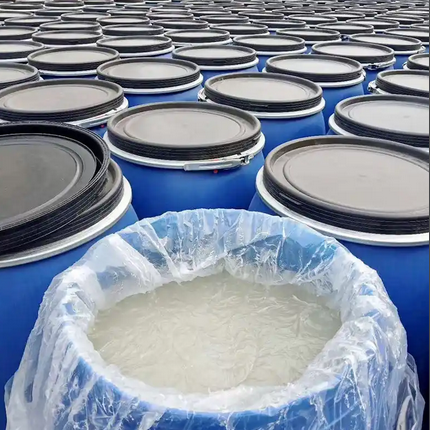
SLES (CAS 68585-34-2): The Unseen Engine Powering Global Industries
SLES (CAS 68585-34-2): The Unseen Engine Powering Global Industries
Sub-headline: From Personal Care to Heavy Industry, Discover the Versatile Applications of Sodium Lauryl Ether Sulfate
Opening Paragraph:
Sodium Lauryl Ether Sulfate (SLES), registered under CAS number 68585-34-2, is far more than just a foaming agent. This versatile anionic surfactant serves as a foundational ingredient across countless sectors, quietly enabling the performance of products we encounter daily. While commonly associated with shampoos and detergents, SLES's unique properties—exceptional foaming, superior cleaning, effective emulsification, and enhanced mildness—have made it indispensable in applications ranging from advanced agriculture to large-scale construction. As industries worldwide seek more efficient and multifunctional ingredients, SLES continues to demonstrate remarkable adaptability. This news feature explores the extensive, and sometimes surprising, application landscape of this chemical workhorse.
1. The Core Domains: Personal Care & Household Cleaning
SLES forms the backbone of modern cleansing formulations, valued for its reliable performance and consumer-friendly properties.
Personal Care & Cosmetics: This sector consumes the largest volume of SLES globally.
Hair & Skincare: It is the primary surfactant in shampoos, conditioners, body washes, facial cleansers, and hand soaps. Its ability to create a rich, stable lather while being relatively mild to the skin and eyes makes it a preferred choice. Variants with higher ethylene oxide (EO) units (e.g., SLES-3) are specifically selected for baby care products and formulas for sensitive skin.
Oral Care: SLES is a key component in toothpastes and mouthwashes, where it acts as a foaming agent that helps disperse ingredients and remove debris.
Household & Institutional Cleaning: SLES's powerful degreasing and cleaning power is harnessed extensively.
Laundry & Dish Care: It is a critical ingredient in liquid laundry detergents, dishwashing liquids (manual and automatic), and fabric softeners.
Surface Cleaners: Found in all-purpose cleaners, floor cleaners, bathroom disinfectants, and kitchen degreasers. Its effectiveness on both oily and particulate soil drives its use in both consumer and industrial cleaning solutions.

2. Industrial & Specialized Applications
Beyond the home, SLES plays a crucial role in diverse industrial processes, often as a performance-enhancing additive.
Agrochemicals & Agriculture: In herbicides, pesticides, and fungicides, SLES functions as a wetting agent, dispersant, and penetrant. It helps spray solutions spread evenly on plant surfaces and improves the adhesion and absorption of active ingredients, increasing efficacy and reducing runoff.
Textile & Leather Processing: The textile industry utilizes SLES in multiple stages:
As a scouring and wetting agent to remove natural oils and impurities from fibers.
As an emulsifier in dyeing and finishing baths to ensure even color distribution and soft handling of fabrics and leather.
Construction & Materials Science: One of the most significant industrial uses is in the production of lightweight, aerated concrete. SLES is used as a foaming agent, where it generates stable, uniform air bubbles in the concrete mix. This results in blocks with excellent thermal insulation, reduced weight, and improved workability, revolutionizing modern building practices.
Paint, Adhesives, and Coatings: SLES acts as an emulsifier and dispersion aid in water-based formulations, helping to stabilize pigments and other components for consistent application and finish.
3. Niche and Emerging Applications
The functionality of SLES continues to be explored in specialized fields, demonstrating its ongoing relevance.
Enhanced Oil Recovery (EOR): In petroleum engineering, specially formulated surfactants based on SLES chemistry can be injected into oil reservoirs to reduce the interfacial tension between oil and water, helping to mobilize and recover additional crude oil that traditional methods cannot access.
Firefighting Foams: While fluorinated surfactants are dominant for fuel fires, SLES can be a component in Class A firefighting foams used for combustible materials like wood and paper, where its foaming and wetting properties help blanket and penetrate burning materials.
Mechanized Tunneling: In tunnel boring machines (TBMs), SLES-based foaming agents are injected into the soil at the cutting head. The foam conditions the ground, stabilizing it, reducing cutterhead torque, and facilitating the removal of excavated material.
4. Driving Factors and Selection by Application
The widespread adoption of SLES across these scenarios is driven by key factors:
Cost-Effectiveness: It offers an outstanding balance of performance and price.
Proven Safety & Regulatory Acceptance: It has a long history of safe use and is well-understood by global regulatory bodies.
Biodegradability: It is classified as readily biodegradable, meeting environmental standards for most down-the-drain applications.
Selecting the right SLES grade is application-specific:
Personal Care: Requires high-purity grades with controlled 1,4-dioxane levels (<30 ppm) and specific EO chains for mildness.
Household Cleaners: Focus is on high active matter (e.g., 70%) for cost-in-use and strong detergency.
Industrial Uses (e.g., Concrete): May utilize technical grades where cost is a primary driver and specific impurity profiles are less critical.
Conclusion
Sodium Lauryl Ether Sulfate (CAS 68585-34-2) exemplifies how a single, well-engineered chemical can transcend its original purpose to become a multi-industry pillar. Its journey from a shampoo bottle to an oil field or a skyscraper's concrete block highlights its unparalleled versatility. As formulation science advances, SLES remains a trusted and adaptable component, proving that its role in shaping both everyday products and industrial processes is firmly established and poised for continued evolution.